
DISC Test: A Practical Lens for Behavior and Communication
- 27 December 2025
Online DISC Personality Test With Profile Assessment
Get StartedUnderstanding the DISC Test: Foundations, Science, and Scope
Human effectiveness improves dramatically when we can decode how people prefer to communicate, decide, and collaborate. In modern organizations and personal development journeys, this behavioral model offers a clear, shared vocabulary that reduces friction and amplifies trust. Focusing on observable patterns rather than opaque traits makes interpersonal dynamics easier to interpret and discuss without judgment.
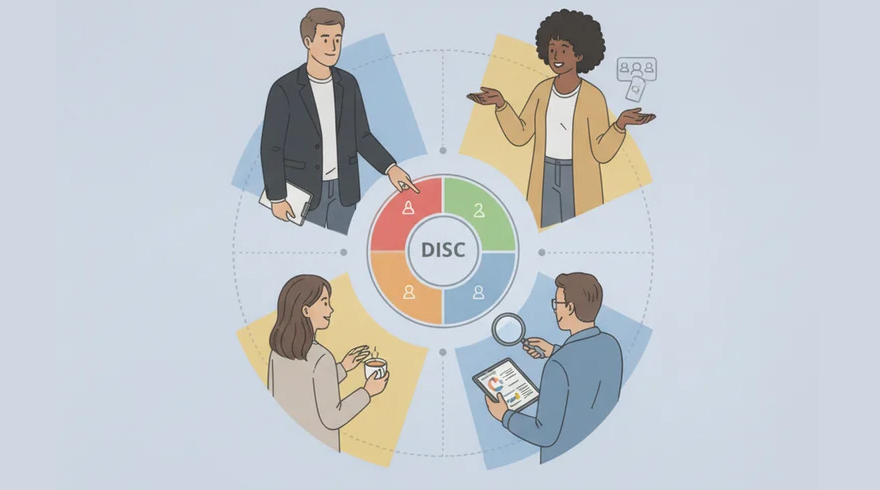
Within this behavioral model, the DISC test serves as a practical instrument for mapping tendencies across Dominance, Influence, Steadiness, and Conscientiousness within minutes. Rather than assigning rigid labels, it highlights situational flex points, stress responses, and interaction preferences that shape daily outcomes. The framework traces its roots to William Moulton Marston’s work on emotions and behavior, later refined by psychometricians who emphasized reliability, validity, and ethical application across contexts. Because language and culture influence how people express behaviors, high-quality implementations consider localization, norm groups, and robust scoring procedures. Another advantage is its coachable nature, enabling participants to adjust messaging, pacing, and problem‑solving style to fit the moment.
In longer development programs, the DISC model personality test provides shared language for coaching conversations and feedback exchanges across teams, cross‑functional initiatives, and client interactions. As participants internalize the four factors, they learn to recognize signals such as speed of decision‑making, appetite for risk, and preference for data versus dialogue. Over time, the model becomes a shorthand for designing meetings, aligning roles with strengths, and setting expectations with remarkable clarity.
- Clarifies how individuals prefer to influence, support, or analyze in different situations.
- Encourages nonjudgmental DISCussions about style differences and conflict triggers.
- Enables adaptive communication that respects pace, detail tolerance, and decision frameworks.
Benefits and Use Cases: From Hiring and Onboarding to Leadership and Sales
Organizations adopt this framework to shorten the learning curve between people who must collaborate under pressure. Leaders use it to tailor feedback, product managers apply it to stakeholder alignment, and sales professionals leverage it to personalize discovery and proposals. In structured selection processes, the DISC assessment test is typically positioned as a development tool rather than a sole hiring gate, ensuring fairness and a focus on job‑related behaviors.
Career architects often pair role mapping with the DISC profile test to illuminate growth paths that match natural motivational drivers and pace preferences. Revenue teams craft call flows, emails, and demos that align with the listening style uncovered by the DISC analysis test, thereby reducing friction and increasing conversion. In service contexts, frontline staff learn to de‑escalate tense interactions by adjusting tone, detail level, and time horizon. Remote teams benefit from explicit agreements on how to share updates, request support, and choose communication channels so that style differences do not derail momentum.
- Leadership: calibrate coaching, feedback cadence, and delegation for each direct report.
- Team dynamics: reduce misinterpretation by naming style needs and stress behaviors.
- Customer work: match message density and structure to the listener’s preference.
- Change management: protect psychological safety while increasing clarity and speed.
How to Administer, Interpret, and Apply Results with Confidence
Implementation succeeds when the process includes preparation, thoughtful facilitation, and action planning. Brief participants about purpose, confidentiality, and how the model will be used to support, not judge, performance. For distributed groups, availability of the DISC test online removes logistical friction, enabling consistent administration and faster turnarounds. After delivery, skilled facilitators translate scores into real‑world behaviors, focusing on strengths, blind spots, and collaboration agreements. The goal is not to change who people are, but to expand their range under varied circumstances.
To make insights immediately useful, compare style patterns with daily workflows, meeting structures, and decision requirements. The quick reference below helps connect patterns to practical moves leaders and teams can make right away.
| Stage | Purpose | Practical Tips |
|---|---|---|
| Preparation | Set context and psychological safety | Clarify goals, time needed, confidentiality, and how insights will be used |
| Administration | Collect responses consistently | Use standardized instructions, quiet spaces, and clear timing guidance |
| Interpretation | Translate scores into behaviors | Connect tendencies to real scenarios, stress cues, and collaboration norms |
| Application | Turn insight into agreements | Define meeting charters, feedback rituals, and conflict‑prevention checklists |
When readiness is high and objectives are explicit, the take the DISC test prompt becomes a doorway to targeted growth rather than a box‑checking exercise. Many L&D teams standardize debriefs so that the DISC model test becomes fuel for action plans, peer coaching, and role‑specific skill sprints. Over the following weeks, leaders can audit workflows and rituals to ensure the environment rewards adaptive communication and evidence‑based decision‑making.
Ethical Use, Limitations, and Complementary Methods
Responsible practitioners emphasize that behavior is contextual and that people can flex styles as needed. Ethical guidelines include informed consent, careful storage of results, and strict avoidance of stereotyping or exclusionary decisions. For budget‑constrained cohorts, curated resources can help, and some programs introduce participants to a starter overview before offering the DISC personality test free option through reputable providers that prioritize data privacy. Complementary tools, such as 360 feedback, strengths inventories, and values assessments, enrich the picture without diluting the model’s clarity.
Sound practice frames the instrument as a conversation catalyst rather than a definitive verdict. Development plans should translate insights into micro‑behaviors like meeting pacing, information structure, and decision protocols. When people crave deeper nuance, facilitators may incorporate scenario‑based coaching or simulations that build agility beyond any single style label. To keep language precise, some teams reference factors directly instead of shorthand types, even when DISCussing the DISC type test during workshops or retrospectives.
- Do: revisit results after major role changes or organizational shifts to update agreements.
- Do: use neutral, nonjudgmental language when discussing tendencies and preferences.
- Don’t: rely on any single instrument for hiring or promotion decisions.
- Don’t: ignore cultural context, accessibility, or neurodiversity considerations.
FAQ: Common Questions About DISC
What does DISC actually measure?
It focuses on observable behavioral preferences such as pace, priority, and approach to problems, people, pace, and procedures. In introductory programs, some teams experiment with the DISC assessment test free option to explore fundamentals before committing to enterprise solutions. The emphasis remains on conversation, adaptation, and practical application rather than labeling.
How accurate or reliable is the instrument?
Well‑constructed versions demonstrate solid reliability and validity evidence, especially when norms and translations are properly maintained. Accuracy improves further when facilitators connect patterns to real tasks instead of generic descriptions.
Can small teams benefit without a big training budget?
Absolutely, because the model’s language is intuitive and easy to teach. Small groups can run short workshops, draft working agreements, and incorporate quick debriefs into weekly meetings.
How often should people retake it?
Most practitioners suggest revisiting after significant role changes, mergers, or new leadership transitions. When budget is tight, participants sometimes seek a DISC test for free refresher to keep style conversations active while planning for deeper facilitation later.
Is DISC a personality tool or a behavior model?
It is best understood as a behavior‑focused model that informs communication and collaboration choices. That orientation keeps the DISCussion practical and change‑oriented, emphasizing adaptation over fixed labels.