The Definitive Guide to DISC Profile Test: Understand Behavior and Communicate Better
- 26 December 2025

Online DISC Personality Test With Profile Assessment
Get StartedUnderstanding the DISC Test and Its Real Value
People accelerate trust and collaboration when they understand how preferences, pace, and priorities shape their interactions. The model commonly called DISC simplifies complex behavioral patterns into a shared language that teams can practice and leaders can coach. Rather than boxing people in, it highlights tendencies under pressure, in routine work, and during change. That clarity turns guesswork into strategy and makes conversations about style feel constructive instead of personal.
In many organizations, the DISC profile functions as a practical map of behavioral tendencies that guides planning and feedback. Trainers appreciate how quickly participants grasp the four factors, Dominance, Influence, Steadiness, and Conscientiousness, without getting lost in jargon. Practitioners use it to illuminate what drives each person, what drains them, and where friction is likely to occur during projects. When teammates see the same situation through different lenses, the model shows how to meet in the middle with respect and intention.
The framework becomes most powerful when insights move beyond buzzwords and into daily routines and rituals. Teams use style knowledge to adjust meeting formats, decision cadences, and handoff protocols that respect different needs. Beyond labels, a careful DISC profile analysis translates patterns into actionable coaching points for managers and individual contributors. By linking observable behaviors to predictable preferences, people gain a roadmap for smoother communication and fewer misunderstandings. Over time, that shared understanding evolves into a culture that rewards clarity, flexibility, and accountability.
Core Dimensions and Real-World Behaviors
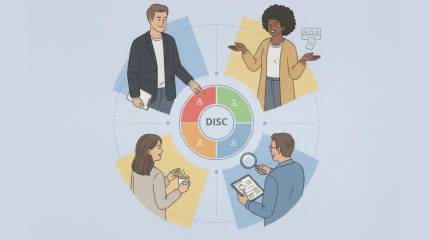
Each of the four DISC dimensions captures distinct drivers and stress responses that shape collaboration. Dominance favors fast action and clear outcomes, Influence energizes relationships and storytelling, Steadiness stabilizes processes and nurtures trust, and Conscientiousness safeguards quality through rigor. Visual models help learners remember the interplay among styles and observe how blends appear in different roles. Many find it easier to see connections when guided by the DISC profile wheel that positions styles across axes of pace and priority. That visual orientation speeds up understanding during workshops and debriefs.
Once the basics land, it is useful to translate tendencies into practical do’s and don’ts for everyday work. People high in D appreciate concise options and autonomy, while those high in I respond to recognition and brainstorming. Colleagues with strong S prefer predictable timelines and steady pacing, and those high in C want context, data, and time to ensure accuracy. In professional environments, a succinct DISC workplace profile turns these patterns into guidelines for meetings, email etiquette, feedback, and decision-making. The result is a set of agreements that reduce friction without stifling individuality.
- Dominance thrives on decisive goals and clear ownership.
- Influence elevates morale through connection and enthusiasm.
- Steadiness fosters continuity with patience and reliability.
- Conscientiousness raises the bar with standards and precision.
Blended styles add nuance, such as DI leaders who mobilize action through vision or SC specialists who perfect complex systems. Recognizing blends helps avoid stereotypes and honors the full context of a person’s role, history, and aspirations. When teams respect differences and adapt with empathy, collaboration turns into a competitive advantage rather than a communication challenge.
Practical Applications in Teams, Hiring, and Leadership
Organizations create scalable value when they embed style awareness into the employee lifecycle. Recruiting, onboarding, sales, service, and project management all benefit from predictable communication playbooks. One commonly used instrument is the DISC profile test administered via secure portals that feed personalized insights. Results give structure to developmental conversations and make it easier to set expectations for pace, detail, and decision rights. Leaders can then weave style-aware habits into standups, retrospectives, and performance check-ins.
Once a baseline is established, people gain momentum by using trends to plan how they’ll collaborate across sprints and seasons. Facilitated workshops, norm-setting sessions, and coaching hours empower teams to translate tendencies into practical rituals. Many HR teams monitor changes through ongoing DISC profile testing that complements qualitative feedback and business metrics. Over time, leaders build a library of proven tactics, from running crisp meetings to navigating conflict, that respects both speed and thoroughness. That continuity keeps initiatives aligned while morale improves.
Learning can be fun and sticky when the format invites interaction, reflection, and real scenarios. Short activities, decision simulations, and scenario role-plays create memorable takeaways. For lighter touchpoints, some teams warm up with a DISC profile quiz that sparks DISCussion ahead of deeper sessions. By mixing rigorous tools with accessible exercises, programs engage both analytical and relational learners. That balance ensures insights turn into lasting habits rather than a one-time workshop memory.
- Use shared language for goals, risks, and trade-offs.
- Agree on escalation paths to avoid bottlenecks.
- Design meeting agendas that align to the task and audience.
- Capture commitments in writing to reduce ambiguity.
How to Run, Interpret, and Sustain Results
Quality programs start by setting intentions and explaining what the tool measures, what it does not, and how results will be used. Psychological safety matters, so participants should know they can ask questions and see exactly how insights inform decisions. For deeper coaching, many teams prioritize a structured DISC profile assessment that pairs scores with behavioral examples. Clear framing reduces anxiety and increases buy-in, which improves the accuracy of self-reflection. With that foundation, interpretation becomes collaborative rather than prescriptive.
After debriefs, it helps to transform insights into team agreements and individual experiments. People may test shorter updates, add data briefs, or extend Q&A time depending on their audience. Budget-conscious groups sometimes look for a DISC profile test free option to introduce the concepts before investing in enterprise tools. A pilot approach can validate value quickly, especially if teams track specific outcomes like faster decisions or fewer rework cycles. Measuring small wins encourages continued adoption.
To keep momentum, combine coaching with workflow tweaks, such as templates for emails, meetings, and handoffs that align to style preferences. Managers can rotate facilitation roles so different strengths get airtime and recognition. Larger organizations often standardize debrief quality with a free DISC profile assessment checklist that drives consistency across departments. Continuous learning beats one-off events, and short refreshers help people adapt as roles evolve. Over time, these practices build a common operating rhythm that scales with growth.
| Dimension | Core Strengths | Watchouts | Helpful Adaptations |
| Dominance (D) | Decisive, results-focused | Impatience, bluntness | Invite input, state rationale |
| Influence (I) | Persuasive, optimistic | Overpromising, distraction | Summarize actions, set checkpoints |
| Steadiness (S) | Supportive, consistent | Resistance to rapid change | Preview changes, pace transitions |
| Conscientiousness (C) | Accurate, methodical | Overanalysis, rigidity | Clarify scope, timebox decisions |
Interpreting style blends benefits from examples tied to your industry, role levels, and customer realities. Sales teams might map style to DISCovery questions, while engineering groups translate it to code review norms and incident response. Leaders can reinforce norms during planning cycles, offsites, and postmortems so the language stays active. With cadence, metrics, and coaching aligned, behavioral intelligence turns into an operational asset that compounds over time.
Frequently Asked Questions
Is DISC a personality test or a behavior model?
It is best described as a model of observable behavior and preferences rather than a measure of deep personality traits. The framework highlights how people tend to approach tasks, influence others, respond to pace, and manage rules or structure in daily work.
Can I try DISC without a large budget?
Many teams begin with introductory workshops and low-cost tools to learn the language before scaling to enterprise licenses. For individuals exploring options, a free DISC profile can provide a helpful starting point for self-awareness and DISCussion. It is wise to pair any result with reflective questions and feedback from colleagues.
How accurate are the results, and what improves reliability?
Accuracy increases when participants feel safe, understand the purpose, and answer based on typical work behavior rather than idealized images. Reliability also improves when debriefs include real examples and observers who can compare patterns across contexts and time.
Where can remote teams complete the process?
Distributed groups can participate through virtual workshops, digital surveys, and video-based coaching that maps insights to collaboration norms. Many providers host secure platforms, and some offer a DISC profile test free online trial to introduce concepts before larger rollouts. Consistent facilitation ensures remote and hybrid participants get equal value.
How should leaders use DISC ethically?
Leaders should use results to enhance inclusion, clarity, and development rather than to label or limit opportunities. Ethical programs emphasize consent, transparency, and ongoing dialogue so people feel respected, heard, and empowered to grow.