The Complete Guide to the DISC Personality Model for Clearer Communication
- 25 December 2025
Online DISC Personality Test With Profile Assessment
Get StartedWhat the DISC Model Is and Why It Matters
Modern organizations need a common language to talk about work styles, conflict preferences, and collaboration patterns. The DISC framework offers a simple yet powerful way to describe how people tend to approach problems, persuade others, pace their work, and follow rules. Instead of pathologizing differences, this model highlights observable behaviors, making it easier to tailor communication and reduce friction. Leaders use it to improve coaching conversations, while individual contributors leverage it to navigate cross-functional projects with fewer misunderstandings.
The tool’s appeal comes from its practicality and its focus on day-to-day behaviors rather than abstract traits. In classroom workshops, onboarding programs, and coaching sessions, the DISC personality assessment gives participants a clear starting point for reflection. People frequently report that it mirrors their lived experiences, making the insights feel actionable and timely. That perceived accuracy helps teams adopt shared terms for stress responses, strengths, and blind spots, which in turn shortens the time it takes to build trust.
Although the model is straightforward, its nuance becomes apparent once you apply it to real-world tasks. In everyday conversations, the DISC personality idea gets translated into specific choices about tone, pace, and detail. A direct teammate might appreciate succinct bullet points, whereas a steadier colleague may prefer context and reassurance. With a shared behavioral map, you can anticipate needs, dial in your messaging, and prevent small tensions from escalating into avoidable conflict.
- Use the framework to set ground rules for meetings and decision-making.
- Capture norms in writing so agreements persist beyond a single workshop.
- Revisit insights during retrospectives to sustain momentum and learning.
Core Dimensions and How They Show Up at Work
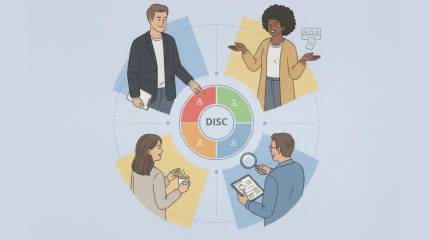
The four DISC dimensions describe distinct yet complementary patterns: Dominance emphasizes decisive action and results, Influence highlights enthusiasm and social reach, Steadiness values support and reliability, and Conscientiousness prioritizes accuracy and quality. These are not boxes but continua, and most people show blends that shift with context. When deadlines loom, a typically steady person may adopt crisper, more decisive behaviors, while a results-driven peer might slow down to validate assumptions on a high-risk project.
Interpretation improves when you connect language to observable signals. For example, a results-forward colleague may open with the bottom line, whereas a quality-focused partner will ask clarifying questions about standards. In this translation process, a written summary or visual map can function like a practical DISC personality profile that anchors debriefs and planning. Teams that label patterns without judgment create space for productive debates and better trade-offs around speed, precision, and collaboration.
Not every context requires deep diagnostics, and sometimes a lightweight snapshot is enough to spark insight. For informal learning, a structured overview works well as a simple DISC personality types test reference that prompts DISCussion. When you shift from general education to hiring, coaching, or conflict mediation, you can layer in richer data and facilitation to ensure ethical, accurate, and fair use of behavioral information.
- Connect each dimension to stakeholder expectations and project stages.
- Plan communication handoffs that respect different pacing needs.
- Balance urgency with quality by pairing complementary styles.
Benefits, Use Cases, and Business Outcomes
Teams adopt DISC because it converts abstract interpersonal friction into concrete choices about meetings, emails, and decision rights. When colleagues align on language, they can plan around differences rather than fight them. Project managers gain a roadmap for sequencing tasks, sales leaders sharpen DISCovery conversations, and customer success teams calibrate tone and tempo to reduce churn. The model also strengthens self-awareness, encouraging people to notice when strengths become overused under stress.
For individuals, the framework accelerates career growth by clarifying when to lean into native tendencies and when to stretch. In coaching sessions, a structured conversation about motivators and stressors can serve as practical DISC personality profiling that guides homework and follow-through. Over time, a shared vocabulary turns feedback from something personal into something procedural, which reduces defensiveness and speeds up learning cycles.
Organizations benefit when a consistent instrument underpins development at scale. In leadership pipelines, a reliable DISC personality assessment tool helps standardize language across cohorts, making it easier to compare learning needs and design targeted programs. When combined with role-relevant practice, these insights translate into measurable improvements in engagement, cycle time, and customer experience. The payoff is a culture that prizes curiosity, clarity, and conscious collaboration.
- Reduce miscommunication by clarifying intent and matching preferences.
- Improve meetings with explicit norms for pace, detail, and decisions.
- Enable faster conflict resolution through neutral, shared terminology.
- Support onboarding with a repeatable map of workstyle expectations.
How to Choose and Use an Instrument Effectively
Selecting the right instrument begins with clarifying your goal: awareness, team alignment, coaching, or talent decisions. That goal shapes depth, format, and facilitation needs. Some teams prefer concise surveys for learning sprints, while others require robust reporting for leadership programs. Implementation matters as much as selection; plan pre-work, guided debriefs, and follow-up routines so insights turn into observable behavior change on the job.
Before purchase, vet psychometric quality, interpretability, and support resources. In program design, a facilitator might introduce a primer before moving into a validated DISC personality assessment test that produces personalized insights. The sequence should reduce cognitive overload and leave room for reflection, practice, and feedback. When leaders model curiosity and humility, the cultural signal amplifies the impact of the learning experience.
| Selection Factor | Why It Matters | What To Look For |
|---|---|---|
| Validity and Reliability | Ensures accurate, repeatable insights across cohorts. | Published manuals, third-party reviews, and norm data. |
| Reporting Depth | Supports coaching, team workshops, and action planning. | Clear visuals, behavioral tips, and role-specific guidance. |
| Facilitation Support | Improves adoption and safeguards ethical use. | Trainer guides, case studies, and scenario-based exercises. |
| Digital Experience | Streamlines delivery for hybrid and remote teams. | Accessible dashboards, LMS integration, and exports. |
For deeper programs, cohort-based workshops may be paired with coaching and practice sprints. After initial debriefs, team leads can revisit insights during retrospectives as they mature into a repeatable rhythm of DISC personality profile testing and application. These touchpoints prevent the content from becoming a one-off event and keep behaviors evolving alongside business priorities.
Self-serve resources can complement formal learning without replacing it. In early DISCovery, some teams start with a short-form DISC personality quiz to spark curiosity before introducing a more comprehensive approach. The combination of light and rigorous methods builds momentum, maintains engagement, and enables people to practice micro-adjustments in real situations.
- Define success metrics ahead of rollout and track leading indicators.
- Use peer coaching to reinforce new habits and vocabulary.
- Translate insights into concrete norms for meetings and decisions.
Implementing DISC Across Teams and Functions
Rollout works best when anchored to real work. Start with a pilot in a team that faces clear collaboration challenges, then expand based on lessons learned. Tie workshops to live projects so participants can immediately apply insights to scoping, stakeholder mapping, and risk management. Program sponsors should signal that the goal is behavior change, not labels, and that everyone owns the shared responsibility to adapt.
Budget-friendly options can support early momentum in resource-constrained environments. In some cases, a workshop can begin with a curated reference that resembles a DISC personality types test free overview to set the stage before deeper diagnostics. As adoption grows, add role-based case studies, job aids, and scenario walkthroughs so the language stays fresh and embedded. The steady cadence of practice and review compounds gains over quarters, not days.
- Pick champions in each department to localize examples and norms.
- Include cross-functional simulations to stress-test collaboration.
- Schedule refreshers aligned to product launches and planning cycles.
Common Mistakes, Risks, and Ethical Use
Misuse usually stems from oversimplification. People are not boxes, and behaviors flex with context, culture, and incentives. When teams fixate on labels, they may overlook growth or create self-fulfilling prophecies. Ethical use demands clear intent, transparent communication, and safeguards that prevent decisions based solely on a single instrument. Training should emphasize observation, consent, and constructive application.
Another risk is relying on improvised resources without understanding limitations. While informal materials can spark interest, cutting corners can backfire in high-stakes contexts where an overly casual DISC personality test free link would not provide sufficient depth or validity. Leaders should set expectations about what the model can and cannot do, and pair it with complementary methods like structured feedback, goal-setting, and skill practice. The aim is capability building, not classification.
- Avoid stereotyping and keep the focus on specific behaviors.
- Do not use a single instrument as the sole basis for employment decisions.
- Offer opt-in participation and protect privacy by design.
FAQ: Practical Answers to Popular Questions
Is DISC a personality test or a behavioral framework?
It is best understood as a behavioral language that describes tendencies people can observe and adapt. Because behavior changes with context, results should be used for development rather than as a fixed identity.
How accurate is it compared with other workplace tools?
Quality varies by publisher, but reputable instruments document reliability, validity, and norming procedures. Accuracy improves when results are debriefed by trained facilitators and applied to specific situations rather than abstract labels.
Can I start with a lightweight resource before a full program?
You can build early momentum with primers and brief surveys, then transition into a validated solution that offers richer insights and structured practice. This staged approach keeps cognitive load manageable and engagement high.
Where can teams access digital materials for remote learning?
Many providers offer online portals, facilitator guides, and participant workbooks that integrate with learning systems. For offline access, some platforms provide a secure option that includes a compliant DISC personality test free download for reference materials such as worksheets or checklists.
How should we sustain progress after the initial workshop?
Create a rhythm of brief refreshers, peer coaching sessions, and project-based experiments that translate insights into day-to-day habits. When leaders model the language and reinforce norms, skills compound and stick over time.